
In the AI Era, Iteration Speed Is the Edge
Author: Jiakang Huang
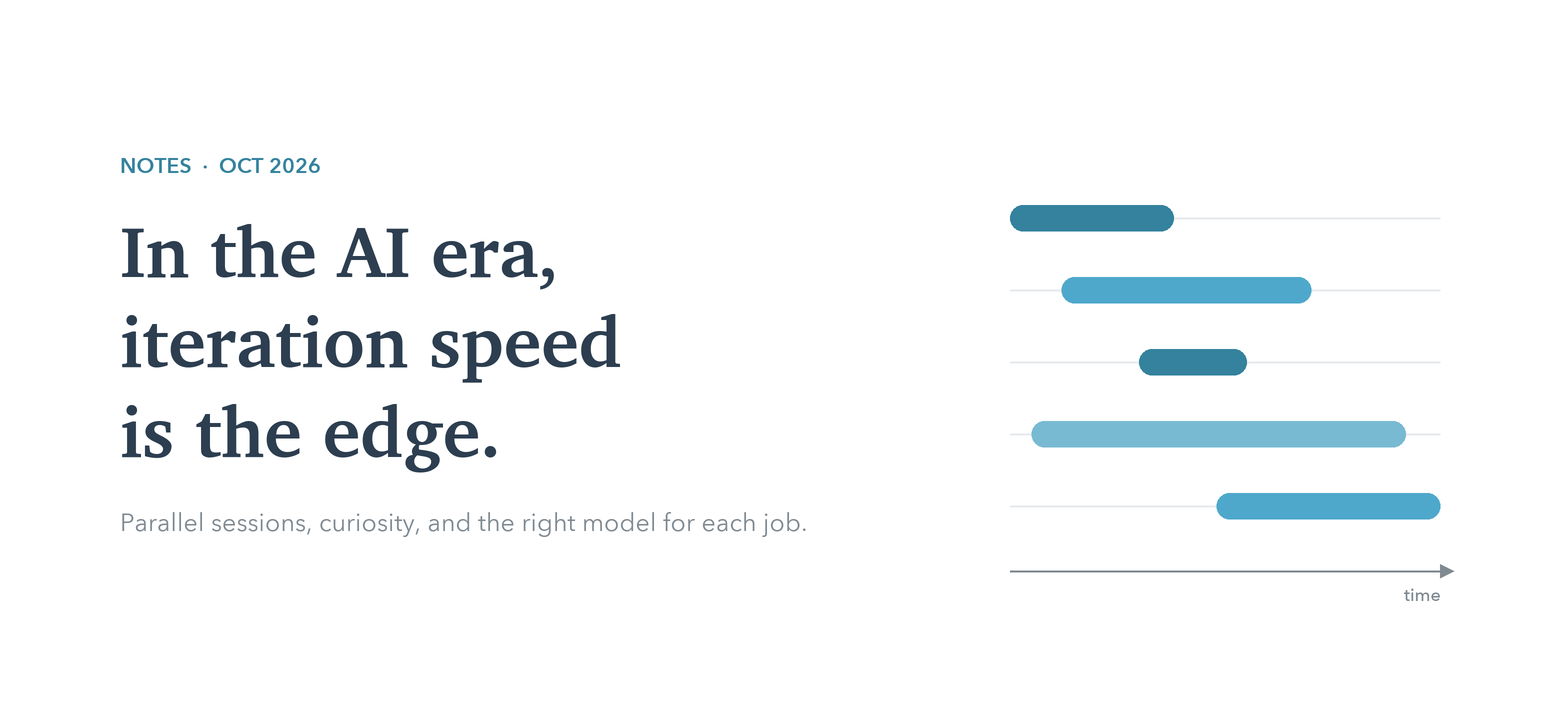
In the AI era, how fast you iterate, and how many projects you can push forward at once, is becoming one of the most important skills you can have.
Many people still resist AI or do not trust it. That is exactly the opportunity: the earlier you learn it, use it well, and keep learning from it, the more you can get done.
Here are a few habits that have sped me up.
1. Run in parallel: from doer to manager
Do not open one conversation and wait for it to finish before starting the next task. Run several sessions at once on different tasks, and your role shifts from the person doing the work to the person assigning it.
That is a real challenge, and it takes two skills:
- Planning: breaking a big goal into pieces that can run in parallel without depending on each other.
- Prioritizing: deciding what is worth parallelizing, what needs your own attention, and what can wait.
Once you get used to working as a manager, the amount you can move forward in a single day multiplies.
2. Stay curious about new features
AI tools change fast, with new features and workflows every few weeks. Many of the biggest productivity gains only show up if you go looking for them.
When something new comes out, spend ten minutes trying it and ask where it fits into your own workflow. Those ten minutes often pay back dozens of hours later.
3. Match each task to the right model
Not every task needs the strongest, most expensive model. Matching models to tasks saves both money and time:
- Small everyday tasks (looking things up, formatting, quick questions): use a fast, cheap, still-smart model such as Haiku. Do not underestimate this. Your waiting time and attention are limited, and a fast answer is efficiency in itself.
- Deep thinking on architecture and design: use the strongest reasoning model, such as Fable.
- Writing code and shipping features: use a model that is good at execution, such as Opus.
Everyone’s needs and situations are different, so there is no single right answer. Use them a lot, compare, and keep thinking until you find the combination that works for you.
AI will not replace the people who know how to use it. The earlier you start, the more it compounds.