Jiakang Huang
I am Jiakang (Daniel) Huang, a Bachelor of Science student in Computer Science at the University of British Columbia. I am interested in the systems and infrastructure that make sustainable, self-evolving AI agents possible. My current work spans compiler optimization for efficient ML workloads (graph fusion in PyTorch Inductor), modular model composition via full fine-tuned model merging, and query optimization in distributed and vector data systems.
I am currently working with Henry Chan, a Principal Software Engineer at Huawei Canada's Field Lab, where I contribute to the development of GaussDB's shared-nothing distributed database system and its vector database branch. In parallel, I am conducting research at the University of Toronto on graph fusion strategies in PyTorch Inductor. During my third year, I also served as an undergraduate teaching assistant for CPSC 213, supporting students in computer systems and low-level programming.
My long-term goal is to build sustainable, self-evolving AI agents that can continuously learn, adapt, and improve. My research path reflects this vision: my first paper focuses on natural language processing, aiming to help AI better understand human language; my second paper centers on AI infrastructure, targeting faster and more efficient systems for training and serving models; and my planned third paper will explore AI memory systems, enabling agents to develop stronger long-term memory.
Beyond academics and research, I co-founded iMark, an AI bookmark assistant built on retrieval-augmented generation, memory-based personalization, and end-to-end product design. Outside of work, I enjoy basketball and CS:GO, where I once ranked in the top 5% globally.
Education

University of British Columbia
Bachelor of Science in Computer Science
Peking University
Exchange Student, Computer Engineering

Chengdu Foreign Languages School
High School
Experience

University of Toronto
Research Assistant

iMark
Co-founder & AI Technical Lead [Website]

Huawei Canada
Software Engineering Co-op
UBC Department of Computer Science
Undergraduate Teaching Assistant
Publications
IntentEval: Evaluating Whether Large Language Models Answer What Users Actually Mean
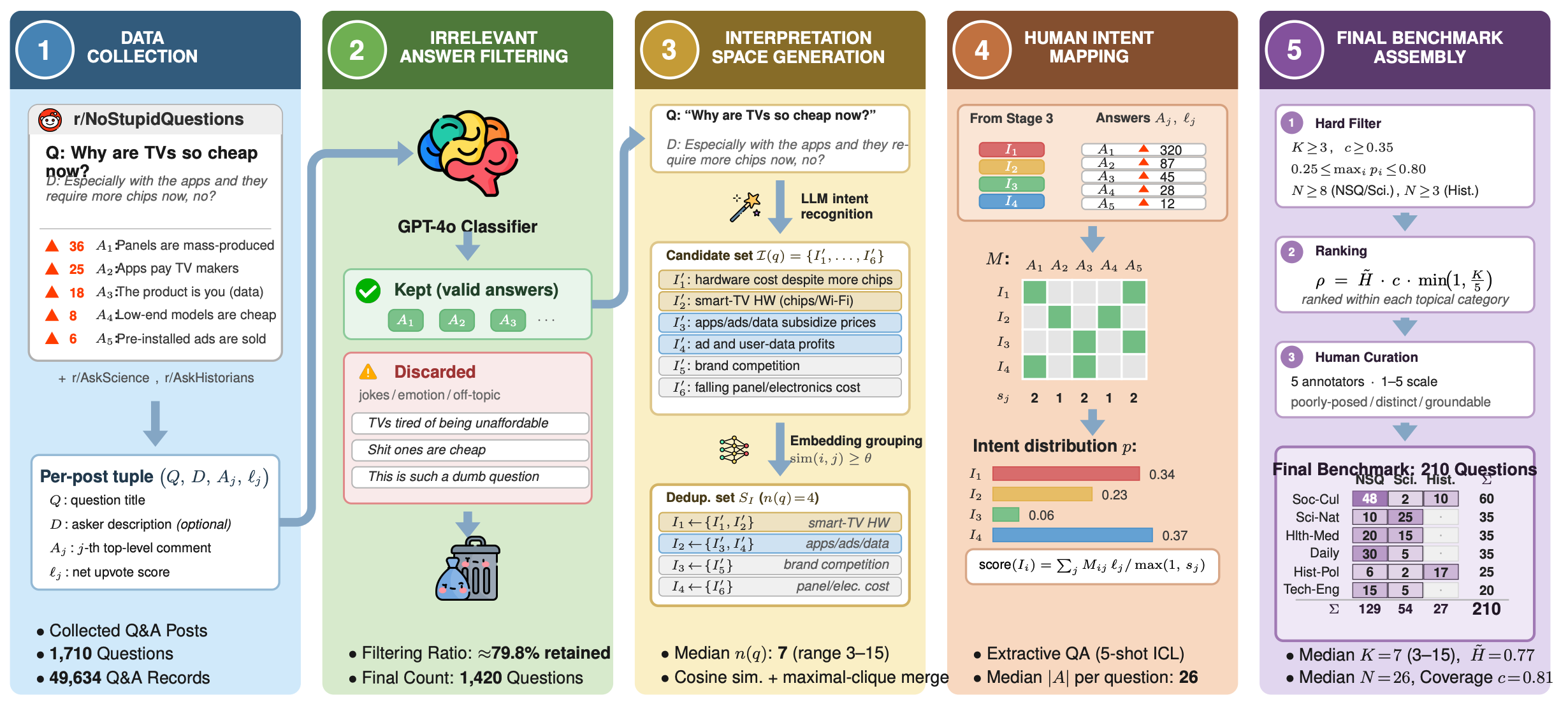
Under review at ACL ARR 2026 May Submission. IntentEval is a benchmark for evaluating whether LLMs answer the user's intended question, using human-derived probability distributions over interpretations and an intent-aware judge. It achieves 0.90 correlation with LMArena rankings.
Fusion-R1: Empower PyTorch Graph Fusion via LLM with Reinforcement Learning
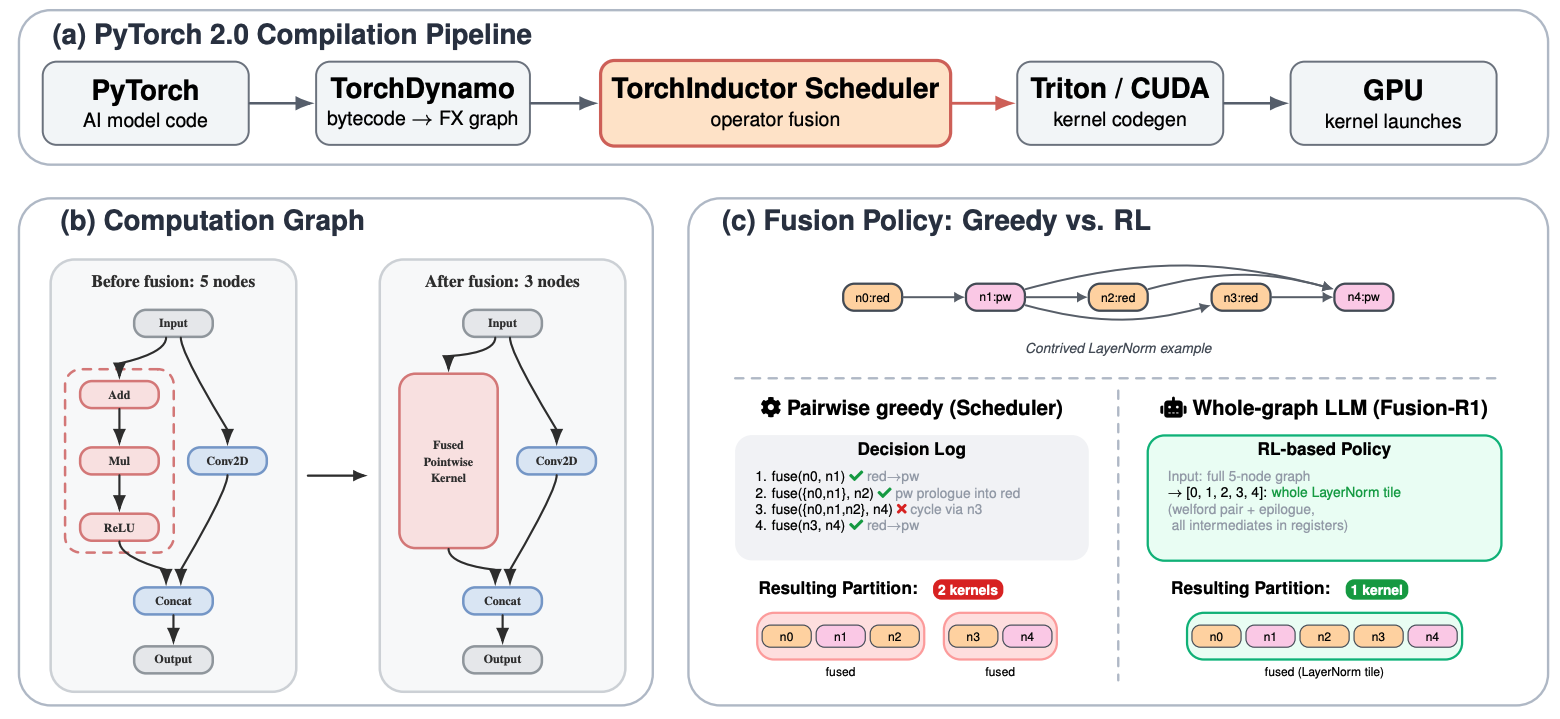
Under review at NeurIPS 2026. Fusion-R1 is an LLM-based fusion proposal layer for TorchInductor trained with GRPO, improving speedup over PyTorch eager mode from 1.74× to 1.83× and reducing average kernel count from 99.10 to 77.18.
Syntactic Prediction through Reinforcement Learning
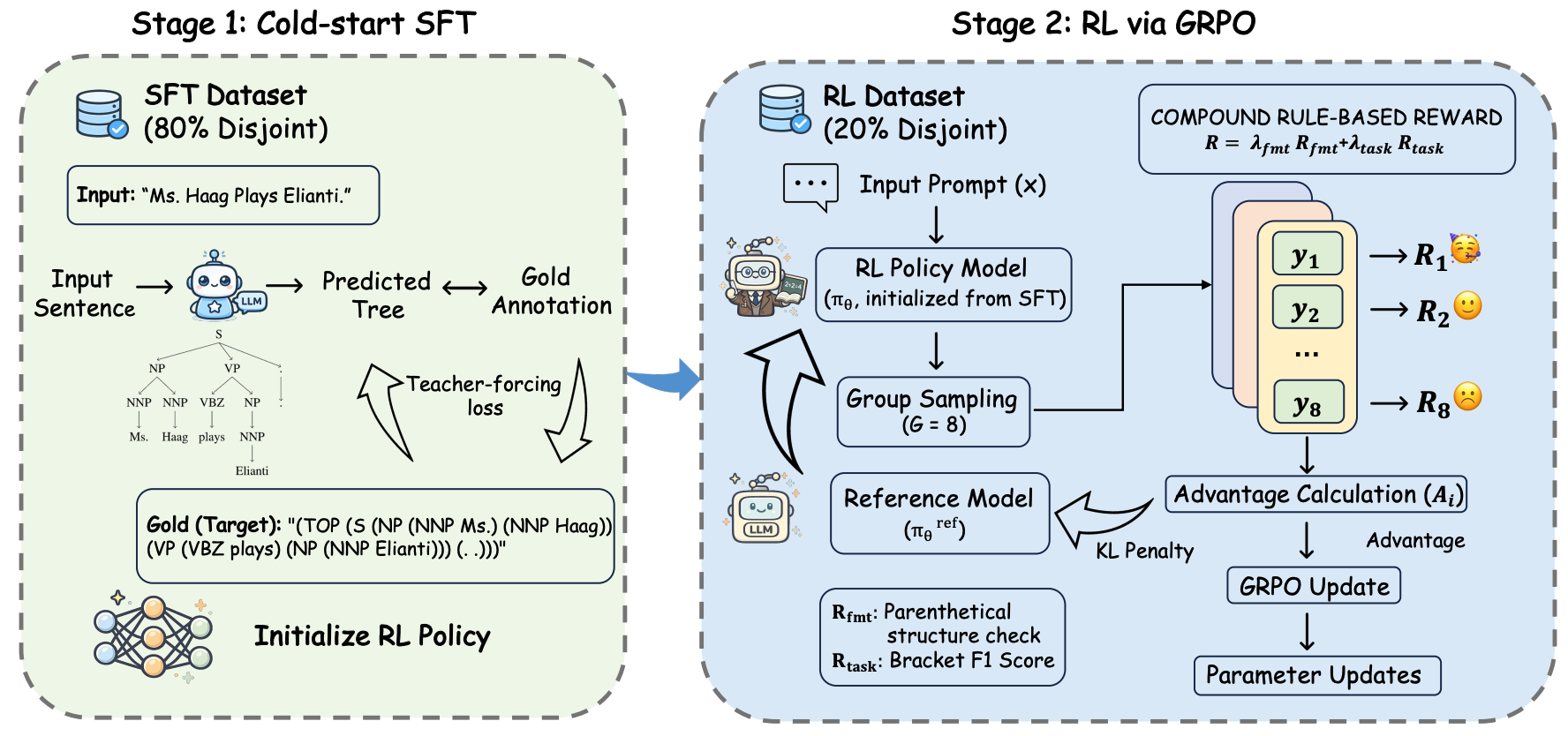
Under review at ACL ARR 2026 March Submission. This is my first paper and it studies reinforcement learning for hierarchical syntactic prediction in large language models.
Blog
March 31, 2026
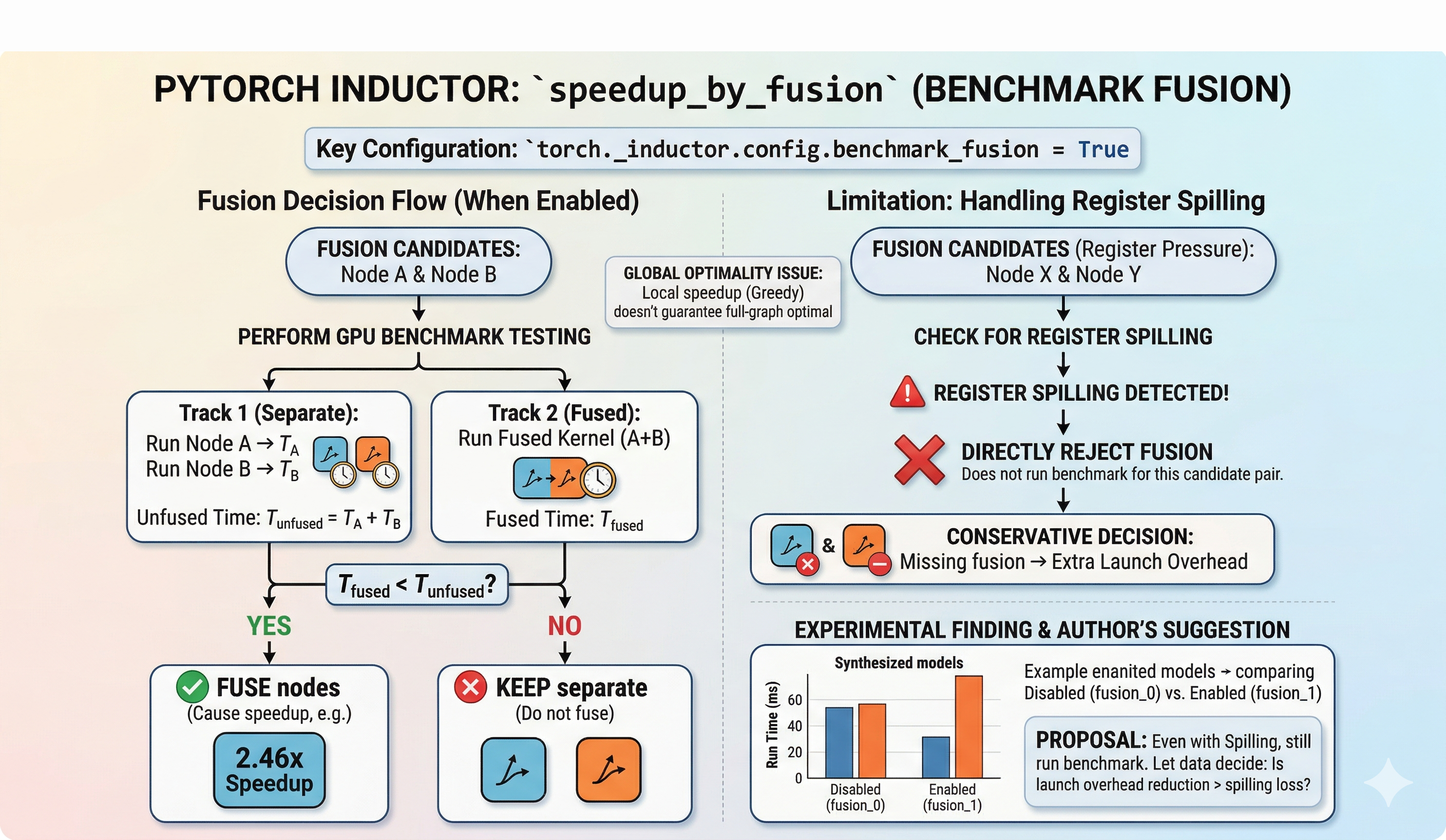
Deep Dive into speedup_by_fusion in PyTorch Inductor
A benchmark-driven analysis of PyTorch Inductor's speedup_by_fusion config, its runtime logs, and why register spilling can reject fusions that still help.
March 29, 2026
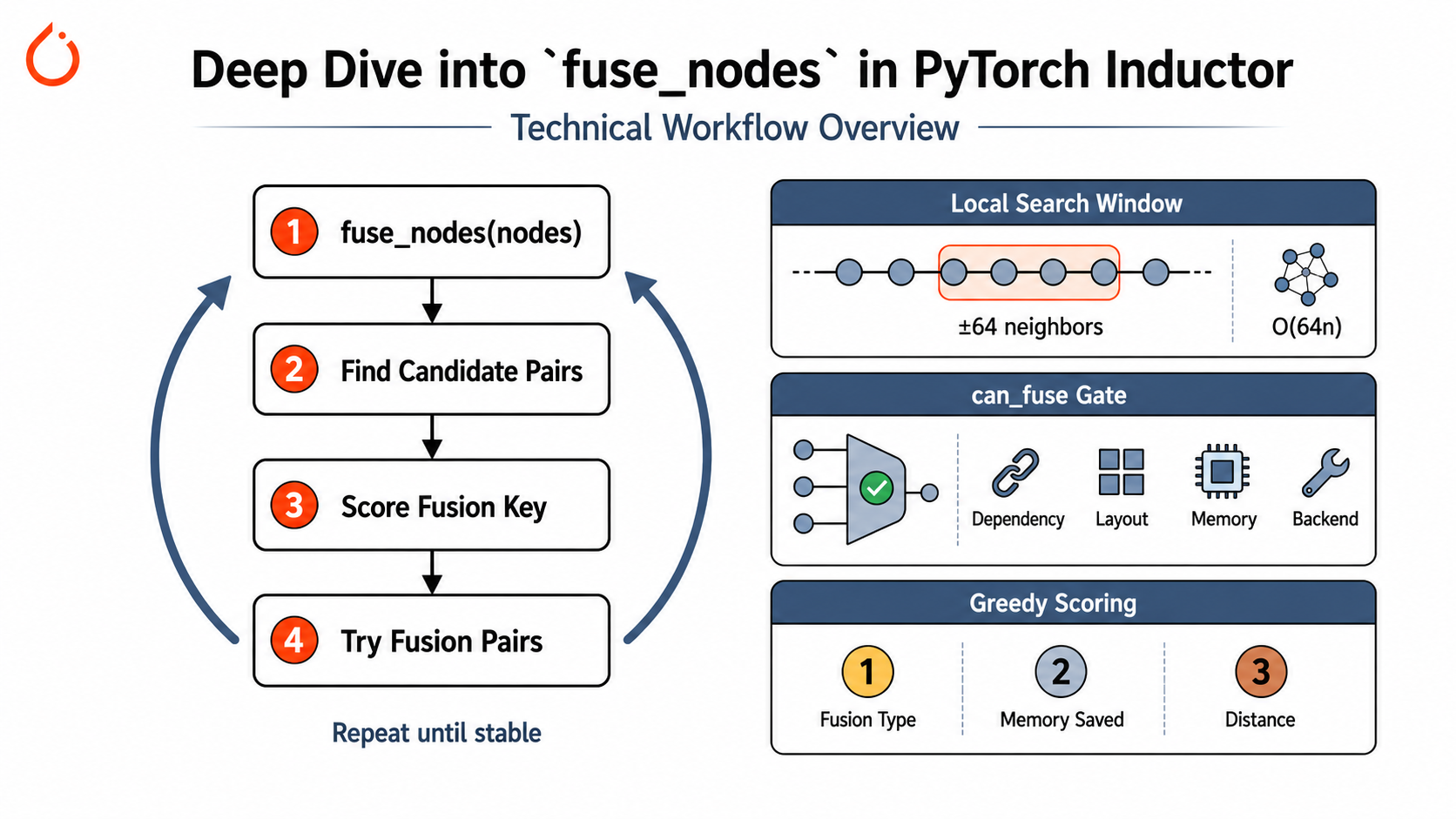
Deep Dive into fuse_nodes in PyTorch Inductor
A structured walkthrough of how PyTorch Inductor enumerates, scores, and greedily applies graph fusion candidates in fuse_nodes.